News
Ayni Gold Weekly Briefing: Gold Finds Its Footing Again
Gold had a better week.
After several weeks of pressure, buyers came back as the dollar softened and markets digested the Federal Reserve’s July decision. The move was not dramatic enough to erase volatility, but it did show something useful: gold still finds demand quickly when the macro picture gets even a little less hostile.
Inflation data looked better, energy risk has not disappeared, and the World Gold Council’s latest demand data showed a market held together by central banks, private investment, OTC demand, and slow-moving supply. Jewellery demand is feeling the pain of high prices. Reserve and investment demand are doing more of the heavy lifting.
RWA markets are also getting less forgiving. The easy phase was proving that assets could be tokenized. The next phase is proving that the token actually means something: real backing, usable infrastructure, reliable data, and a product people can understand without reading a legal memo first.
Gold and Macro Brief
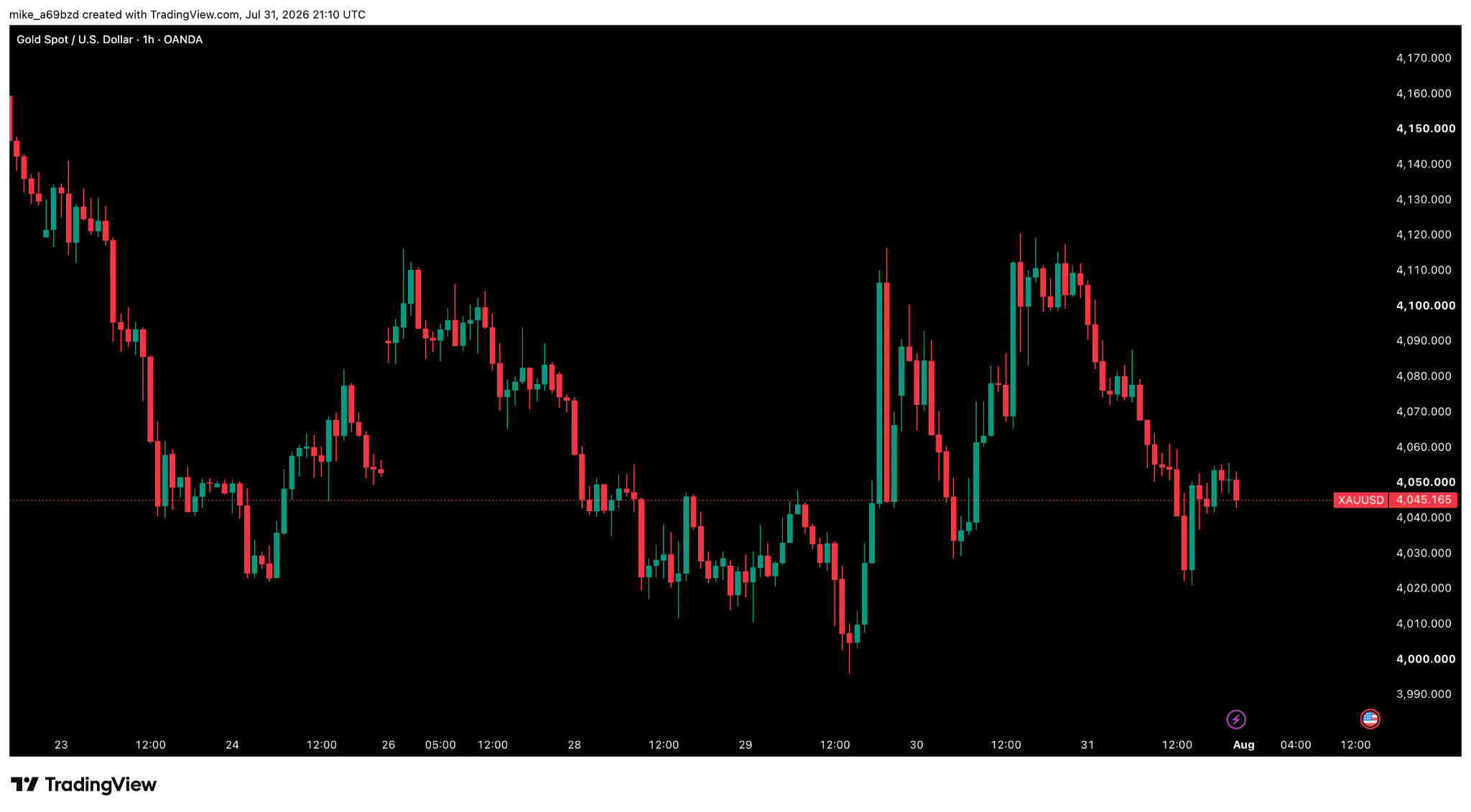
Gold moved back above the $4,000 per ounce area this week as markets reacted to the Federal Reserve’s July meeting and fresh U.S. inflation data.
Reuters reported on July 31 that spot gold was around $4,096 per ounce and heading for a 1.1% weekly gain. It was also on track for its first monthly gain after four straight months of losses, with July performance above 2%. That is not a clean victory lap. It is more like the market catching its breath after a hard stretch.
The rate picture helped. The Federal Reserve left its benchmark rate unchanged at 3.50% to 3.75% on July 29. The decision still had tension inside it: three policymakers dissented in favor of a quarter-point hike, and Chair Kevin Warsh kept the focus on bringing inflation back to 2%. Even so, markets reduced the odds of a September hike after the meeting. That helped gold by taking some pressure off the opportunity cost of holding it.
Inflation added another push. Reuters reported that the U.S. Personal Consumption Expenditures Price Index fell 0.1% month over month in June, the weakest monthly reading since April 2020. That gave markets a reason to reassess how much pressure the Fed is under right now.
Middle East risk and oil-market stress are still alive. If energy prices move higher again, inflation concerns can come back quickly. Gold is still trading inside that tension: restrictive policy on one side, safe-haven demand and hard-asset demand on the other.
The World Gold Council’s Q2 2026 report fits that picture. Total gold demand including OTC was roughly flat year over year at 1,269 tonnes. First-half demand reached 2,522 tonnes, up 2% year over year, with a record value of $380 billion.
Central banks bought 288.9 tonnes in Q2, up 62% year over year. Bar and coin investment stayed near 307 tonnes. Gold ETFs saw outflows of 44.8 tonnes. Jewellery consumption fell to 278.2 tonnes, the lowest quarterly volume since the pandemic, as high prices made physical jewellery harder to absorb.
Supply is not rushing in either. The World Gold Council reported total supply at 1,268.9 tonnes in Q2, broadly flat year over year. Mine production rose 2% year over year, while recycling fell 6%. Higher prices help margins, but new mine supply does not appear overnight. That keeps gold sensitive to investment demand, central-bank flows, and macro surprises.
For the rest of 2026, the World Gold Council expects investment demand to remain the main growth driver, helped by OTC activity and Asian buying. Central banks are expected to remain significant buyers, while high prices continue to weigh on jewellery volumes. It is not a calm setup, but it is a durable one.
RWA and Tokenization
The RWA market is moving into a more selective phase.
The question now is which tokenized assets have real backing, enough liquidity, clean data, and a place inside actual financial infrastructure.
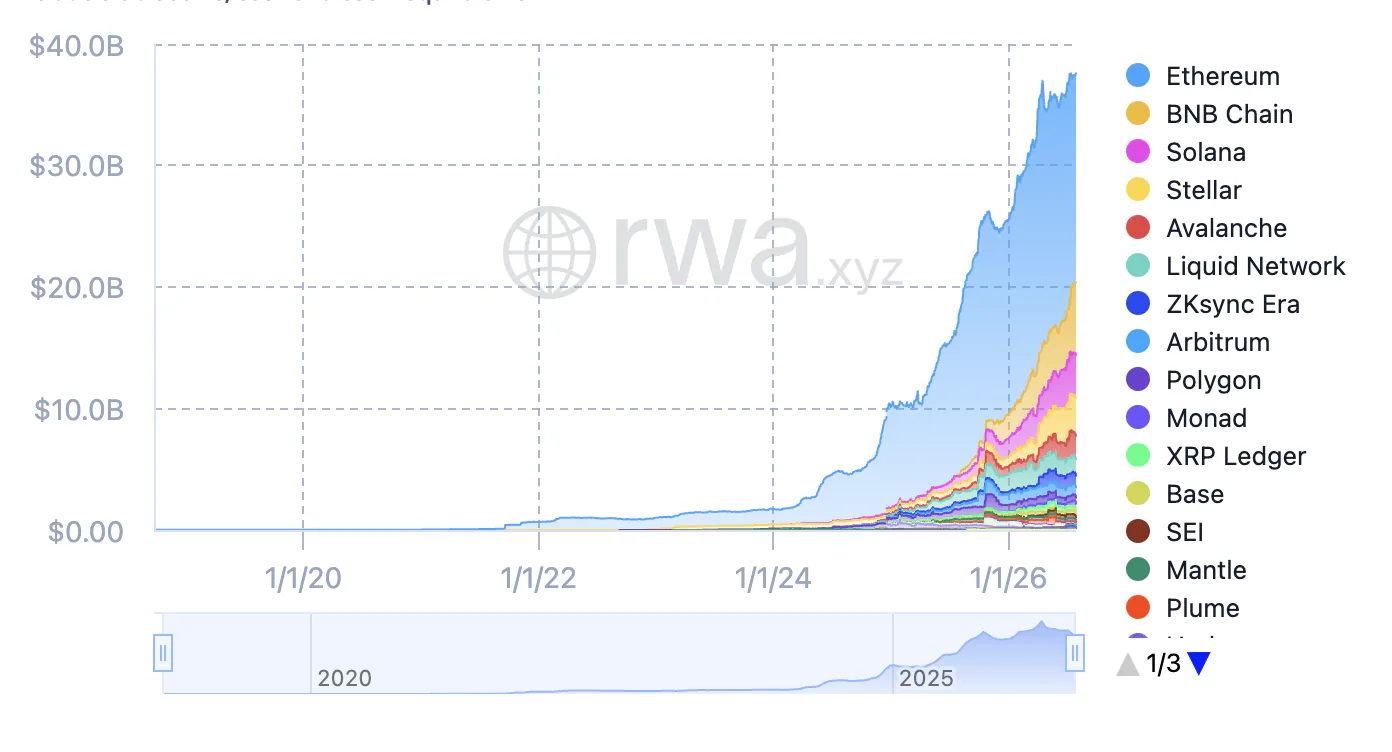
RWA.xyz showed represented asset value near $379.6 billion, total asset holders above 1.34 million, and 30-day holder growth above 37% at the time of review. Stablecoins still dominate the adjacent market, with value near $297.9 billion and more than 277 million holders. Ethereum remained the largest network by tokenized RWA value, followed by BNB Chain, Solana, Stellar, Avalanche, Liquid Network, ZKsync Era, Arbitrum, Polygon, and Monad.
The chain breakdown matters because tokenization is becoming a distribution problem. Issuance is only step one. The asset also needs wallets, settlement, custody, data, reporting, and some practical reason to exist on digital rails.
Treasury and money-market products remain the most mature segment. RWA.xyz listed large products such as Circle USYC, BlackRock BUIDL, Ondo USDY, Franklin iBENJI and BENJI, Centrifuge JTRSY, and other short-duration or cash-equivalent instruments. These products make sense in the current market because they connect familiar financial assets with faster digital settlement.
The market is widening, though. RWA.xyz now tracks categories including non-U.S. government debt, credit, stocks, private equity and venture exposure, active strategies, commodities, and real estate. That does not mean every category is liquid or ready for broad use. It means the infrastructure is being tested across more types of financial claims.
The mid-year Stobox Research report described the same shift. It estimated on-chain RWA value excluding stablecoins at around $33.5 billion in July 2026 and framed the market as moving from experimentation into regulated reality. The most useful line from that whole discussion is simple: issuing a token does not create a market.
That is where the serious work begins. Tokenized Treasuries and private credit often behave more like mint-and-redeem products than active markets. Tokenized equities and tokenized gold show more visible trading activity, but they also bring harder questions: legal structure, custody, redemption, price tracking, and what the holder can actually claim.
Tokenized gold remains one of the cleaner bridges between physical assets and digital rails. Stobox Research and CoinGecko both pointed to tokenized gold spot volume reaching $90.7 billion in Q1 2026, already above the full-year 2025 figure of $84.6 billion. That is a real signal. Gold-backed tokens are not just sitting in wallets as proof-of-concept assets. They are being traded as part of a broader on-chain hard-asset market.
That fits the macro backdrop. When gold is supported by central-bank demand, inflation uncertainty, geopolitical risk, and constrained supply, tokenized gold sits between two forces: demand for physical-value exposure and demand for digital transferability.
The strongest products in this space will not win because they use the word tokenization. They will win because users can understand the backing, follow the records, and see how the asset connects to something real.
Ecosystem Updates
This week was mostly about groundwork.
On the concession side, the team continued working through practical site improvements, including more reliable energy supply and smoother operating conditions. These are not flashy updates, but they matter. A better site setup makes the whole operation easier to run and easier to scale step by step.
We also continued improving the app experience. The focus is on cleaner UI, clearer flows, and fewer moments where a user has to stop and wonder what to do next. Small UX changes compound quickly in a product like this, especially when people are learning a new model of gold-linked access at the same time.
We are also improving the education layer around Ayni Gold. More content is being prepared to explain how the model works, why tokenization matters, and how digital access can connect back to real-world gold operations.
Ayni Weekly Briefing
We share weekly updates on gold, tokenized assets, product progress, and the Ayni Gold ecosystem.
Follow the latest briefings on our website, and register in our app to receive future editions directly in your inbox.

More articles
August 18, 2026
Ayni Gold Weekly Briefing: Cooler Inflation Gives Gold Room to Advance
Gold rose 1.3% for the week as cooler inflation data and weaker consumer readings pulled September rate-hike odds from 55% to 31%, while Coinbase, Securitize, MUFG, and Ether.fi each pushed tokenization further into regulated financial infrastructure.

August 11, 2026
Ayni Gold Weekly Briefing: Gold Breaks Higher as Rate-Hike Bets Recede
Gold surged more than 7% for the week as a weak US payroll report, softer oil prices, and falling bond yields pulled rate-hike bets off the table, while BlackRock expanded its on-chain reserve products and tokenized gold moved in step with the rally.
July 27, 2026
Ayni Gold Weekly Briefing: Oil Shock, Strong Jobs Data, and a New Push in Tokenized Markets
Gold held near $4,000 as Brent crude topped $100 and U.S. jobless claims hit their lowest since 1969, tokenized ETFs reached a $526.4M high, and Ayni Gold shared a June update, a League of Traders talk, and San Hilario progress.